NEWS
13
2025
-
06
Fully automatic intelligent microwave digestion of chalk
1. Preface
Chalk, also known as white clay powder, white clay, white clay, white goodness, white 墡. Chalk is a fine deposit of calcium carbonate and a variety of calcite. Chalk is mainly composed of the remains (stones) of single-celled plankton, including the shells of Marine animals such as spongy bone needles, planktonic foraminophore shells, ammonites, arromedes, sea urchins and shellfish fossils. Generally, it mainly refers to the strata of the Cretaceous period distributed in Western Europe, and the name "Cretaceous" originated from this. Chalk, as a mineral, is generally used to make products such as chalk. We chose a chalk sample for the microwave digestion experiment and sought an experimental method that could completely dissolve it.
2 Instruments and reagents
2.1 Instruments
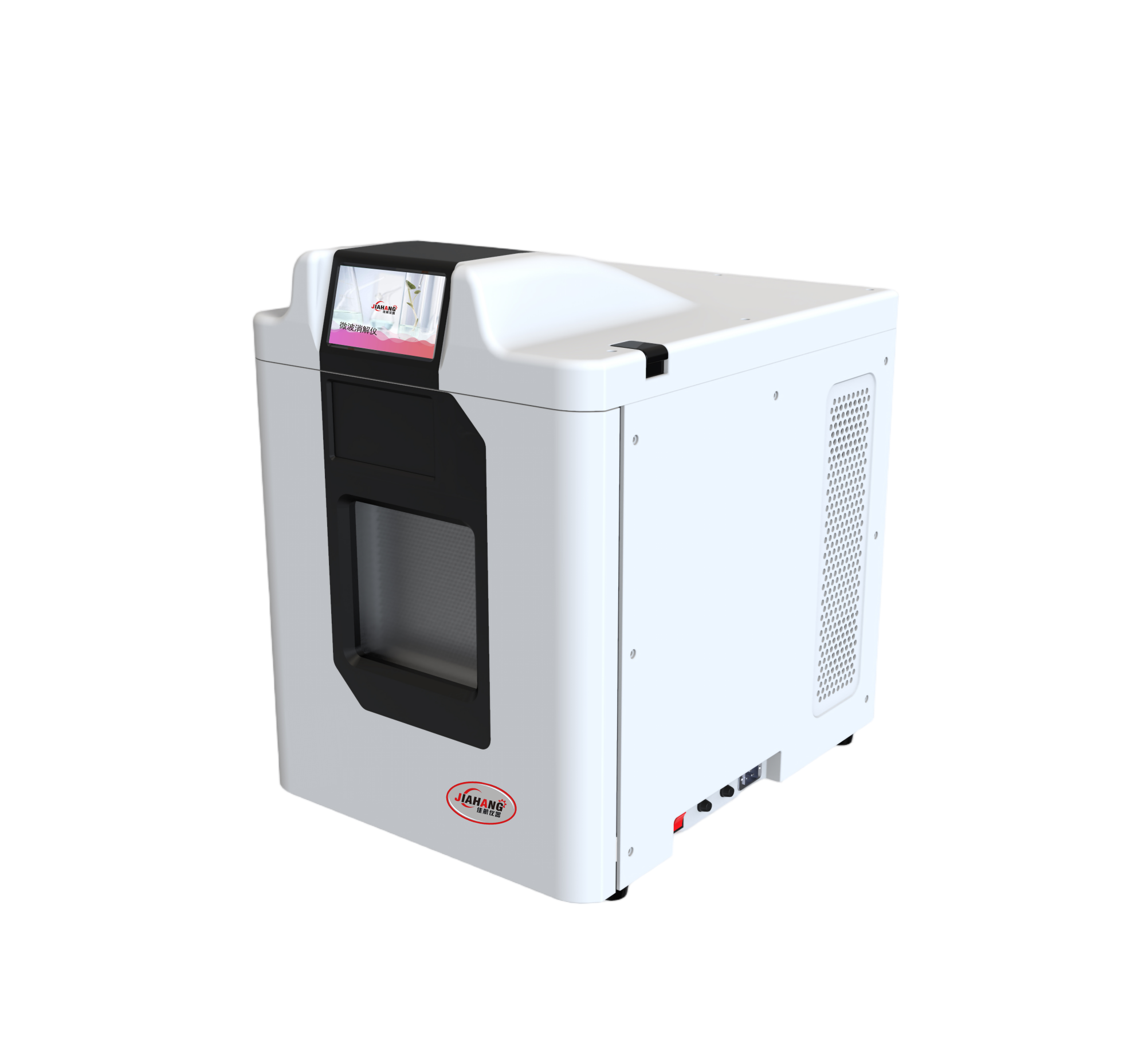
Digipol-MWD30 fully automatic intelligent microwave digestion instrument, TK-12 acid eliminator, analytical balance (one part per 100,000), etc
2.2 Reagents
Nitric acid (68%), hydrofluoric acid (40%), fluoroborate (40%), hydrochloric acid (38%), saturated boric acid solution
3 Experimental Methods
3.1 Exploration of Microwave Digestion Parameters
Accurately weigh 0.1g of chalk sample (accurate to 0.1mg), place it at the bottom of the digestion tank, and add 2mL of nitric acid and 6mL of hydrochloric acid
Mix with 2mL of hydrofluoric acid, let it stand for about 20 minutes, assemble the digestion tank, and conduct the digestion experiment according to the following set parameters:
Table一
| Stage | temperature /℃ | Time /min | Power /W |
|
1 |
150 |
10 |
400 |
|
2 |
180 |
5 |
400 |
|
3 |
210 |
45 |
400 |
At the end of the experiment, after acid dilution, the solution contained a large amount of white precipitate.
Re-weigh 0.1g of the sample (accurate to 0.1mg), place it at the bottom of the digestion tank, add 1mL of nitric acid, 3mL of hydrochloric acid and 6mL of fluoroboric acid, let it stand for about 20 minutes, assemble the digestion tank and conduct the experiment according to the following set parameters:
Table二
| Stage | temperature /℃ | Time /min | Power /W |
|
1 |
150 |
10 |
400 |
|
2 |
180 |
5 |
400 |
|
3 |
210 |
60 |
400 |
After the experiment was completed, the solution was taken out after cooling to below 60℃ and transferred to a fume hood. The digestion tank was opened. After the acid was removed and diluted, the precipitate in the solution decreased. The amount of fluoroborate was increased and the experiment was conducted again, but the precipitate still could not be completely removed.
Weigh 0.1g of the sample again (accurate to 0.1mg), place it at the bottom of the digestion tank, add 2mL of nitric acid, 6mL of hydrochloric acid and 3mL of fluoroboric acid, let it stand for about 10 minutes, assemble the digestion tank and conduct the experiment according to the parameters set in Table 1. After the experiment is completed and cooled, transfer the digestion tanks to the fume hood and open them. Add 10mL of saturated boric acid solution to each tank, reassemble the digestion tanks, and conduct secondary digestion according to the following parameters:
Table三
| Stage | temperature /℃ | Time /min | Power /W |
|
1 |
150 |
10 |
400 |
|
2 |
180 |
5 |
400 |
|
3 |
200 |
45 |
400 |
After the experiment is completed, take it out after cooling to below 60℃, transfer it to a fume hood, open the digestion tank, and after the acid is removed and diluted, the solution becomes clear and transparent.
4 Result
The chalk samples selected for the experiment were digested using a mixed acid system of aqua regia and hydrofluoric acid with a sampling volume of 0.1g. After cooling, saturated boric acid solution was added for secondary digestion, which could completely dissolve the samples.
Precautions
Aqua regia has strong volatility and corrosiveness. The acid addition step must be carried out in a fume hood, and the laboratory personnel should take good protective measures.
The samples selected for this experiment contain a large amount of calcium carbonate and a certain amount of silicate. After adding hydrofluoric acid to remove the silicate, calcium fluoride precipitate will form. Then, by adding saturated boric acid solution to dissolve the fluoride, two microwave digestion processes are required.
Keyword:
Fully automatic intelligent microwave
WELCOME TO JIAHANG
Do you want to Send Inquiry ?

COMPANY CONTACTS
Office Tel: +86-177-2114-8861
+86150-0214-1603
E-mail:gm@jiahanglab.com
Factory: NO.3570 Jiasong north Rd, Jiading Dist, Shanghai , China
R&D Sales Center:
13F,BD1,Lane 925, Aksu South Rd, Jiading Dist Shanghai , China
Mob/Whatspp: 0086 177 2114 8861
Copy Right © 2023 Shanghai Jiahang Instruments Co., Ltd. All Rights Reserved
 0086 17721148861
 +86-17721148861
 E-mail